How to Navigate Social Media Crises: Strategies for Damage Control

Every brand is one misstep away from a social media crisis. Whether it’s a poorly timed post, an unfortunate comment, or a big misunderstanding, these incidents can quickly spiral out of control.
So, what strategies can your brand use to navigate and rebound from crises? In this article, we will explore strategies for managing public relations crises online. We will also carve out a roadmap for handling social media backlash.
What is a social media crisis?
A social media crisis occurs when negative information about your brand spreads quickly on any social platform. It could be due to a mishap, a bad review, or even a misunderstanding that goes viral.

This can happen to anyone, even the biggest brands you know. That’s why it’s super important to know how to deal with these situations!
Why is effective crisis management important?
You might think that a few negative comments wouldn’t hurt your business that much, but they can. A social media crisis can harm your brand. You may lose customers, damage your reputation, and ruin sales!
Furthermore, investing in social media crisis management yields these results:
Protect your brand's reputation.
Regain your audience’s trust.
Show that you care about customer feedback.
Create a loyal customer base that appreciates transparency.
Understanding the nature of social media crises

To manage social media crises, it's vital to know their causes. Scandals or backlash often follow from poor communication or controversial posts. Even simple misunderstandings can cause them.
Here are some common triggers for social media crises:
Negative customer experiences: An unhappy customer may cause a social media backlash.
Offensive content: Your brand posts something inappropriate, causing public outrage.
Controversial posts: A post that offends or alienates a group of people.
Public figure associations: A scandal involving a public figure linked to your brand can damage your reputation.
The impact of social media crises on brand reputation
Did you know that a single negative post can reach thousands of people in mere minutes? If left unchecked, social media crises can cause long-term damage to your brand.
But here are some of the impacts social media crises can have on your brand:
Customers may lose faith in your brand if they see a lack of seriousness in addressing their concerns.
Bad press: The news might pick up on the negative sentiment, further amplifying the damage.
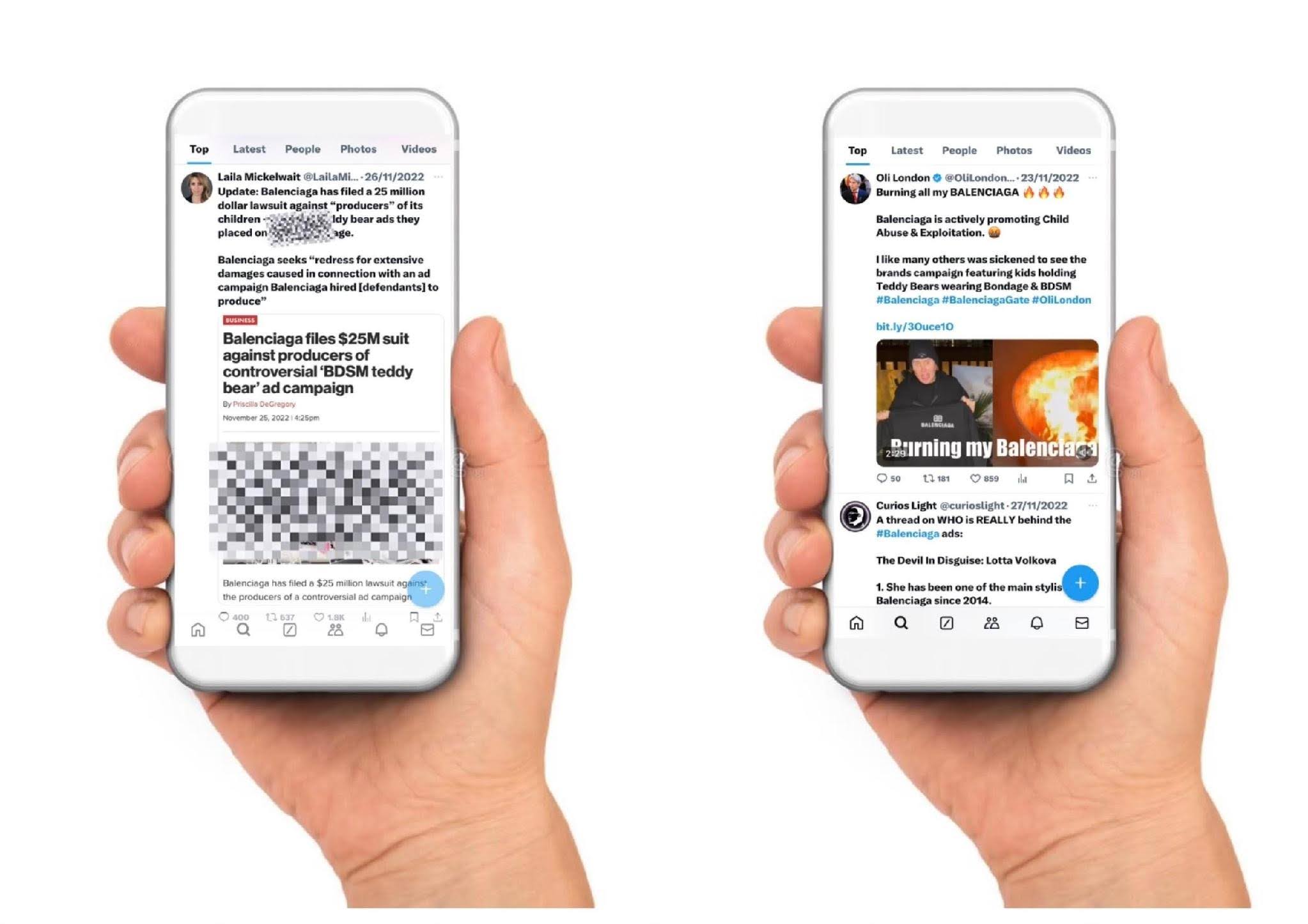
Reduced sales: People may avoid your brand out of fear of bad experiences or negative associations. One of many examples is the 2022 ad scandal involving Balenciaga. Many famous stars disassociated from them. They even threw away their products.
How to prepare and manage a crisis

The key here is that these crises tend to grow in intensity, with tweets and posts spreading at an alarming rate. So, as a social media manager, it’s essential to have a plan.
Let’s discuss how to prepare for and recover from a crisis while still protecting brand image online.
Have a crisis response plan.
The first and most important step is responding to social media scandals. Develop a crisis response plan for social media before trouble strikes.
This plan should outline procedures, key contacts, and crisis communication strategies. A proper plan can save time and chaos when emotions are running high.
Sample Plan Structure:
Define potential risks: Identify the most likely crisis scenarios.
Assign roles: Choose team members to manage different aspects of the crisis.
Draft holding statements: Prepare pre-written, flexible responses. Adapt them as needed for the situation.
This way, when a crisis hits, you’ll have a game plan ready to go. Imagine it like a fire drill—hopefully, you won’t need it, but if a fire does break out, you’ll be glad to have practiced.
Check social media activities.
Keeping an eye on social media is crucial for a quick response. Powerful tools can alert you when someone mentions your brand in a negative light.

Track social media for fresh information. Also, consider tools like Hootsuite or Brandwatch to track sentiment.
Provide prompt and sincere responses.
Timing is everything when it comes to social media crises. Your audience wants to know that you see their concerns and that you care.
If you delay, negative comments will take over the narrative.
Crafting your response:
Acknowledge the issue: Let people know you understand their concerns.
Be honest and transparent: If you made a mistake, admit it. Honesty builds trust.
Offer solutions: If possible, outline your plan to fix the issue and prevent it from happening again.
Communicate with empathy.
In a crisis, your audience doesn’t only want answers; they want to feel heard. Use a sympathetic tone in your messaging.
Empathy can transform a negative experience into a positive dialogue.
Tips for empathetic communication:
Use "we" instead of "you" to show solidarity.
Express regret rather than defensiveness.
Show understanding of the feelings and perspectives of those affected.
Take conversations offline when necessary.
Sometimes, a public forum isn’t the best place to hash out issues. If the conversation gets too heated, it's fine to ask to move it to DMs or private emails.
When to take it offline:
When the discussion escalates and attracts more negativity.
When you need more information from the customer to resolve the issue properly.
When sensitive information is on the table.
Learn from the crisis.
Once the dust settles after a crisis, it's time to reflect and learn. Review what happened, test how you handled it, and identify areas for improvement.

This post-crisis analysis helps refine your crisis management plan.
Key points to consider:
What triggered the crisis?
How effective was your response?
What can you improve for next time?
Rebuild trust with your audience.
After a crisis, it’s essential to work on rebuilding trust with your customers. Share updates about changes made and improvements implemented due to the crisis.
Tips for rebuilding trust:
Communicate openly about what’s being done to address the concern.
Engage positively with your audience—thank them for their patience.
Share future content about community engagement and values to reinforce your brand recovery.
Final note
Navigating social media crises doesn’t have to be a daunting task. All you need to do is to be vigilant, provide prompt replies, and adapt after mistakes.
Remember, it’s all about creating an effective online reputation damage control strategy and ensuring your audience feels valued and heard. For more on social media management strategies, check out 50 Pound Social’s community management resources.
Be the first to know about every new letter.
No spam, unsubscribe anytime.